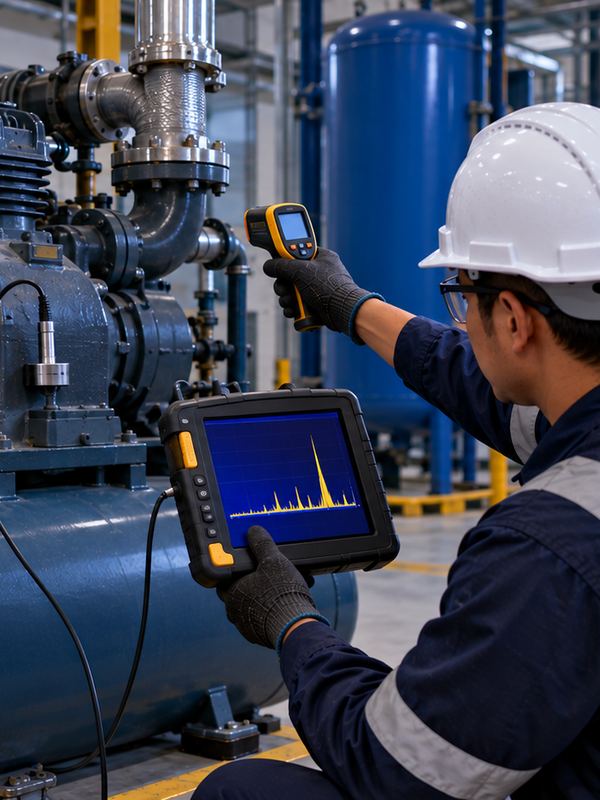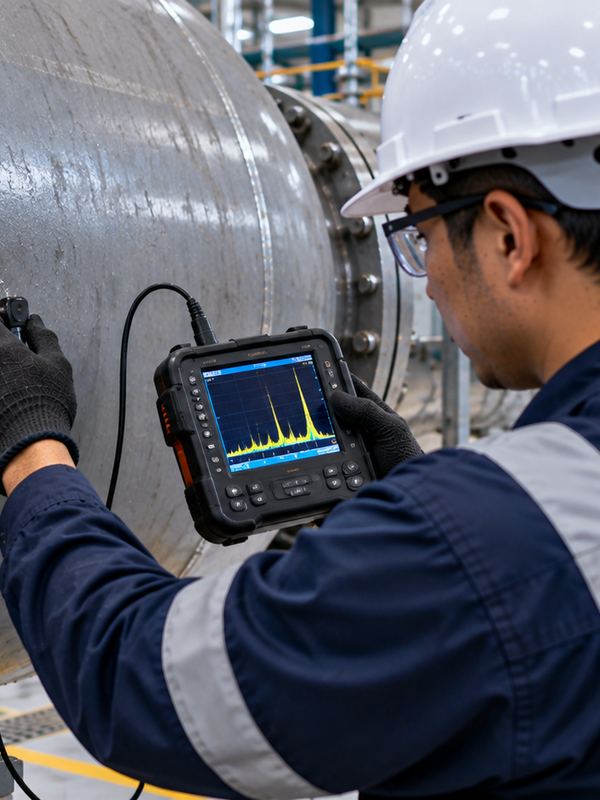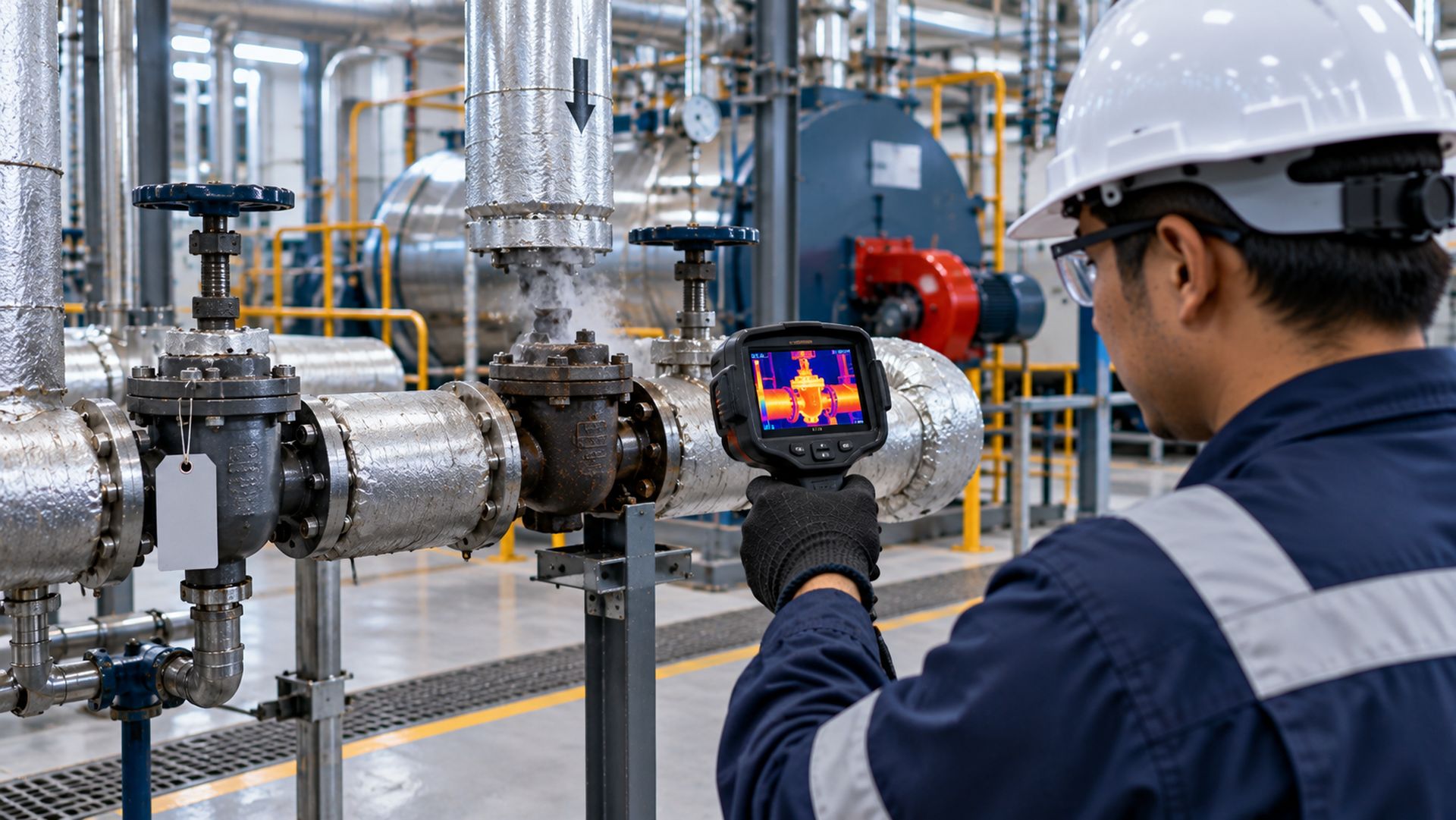
A steam trap that has failed open wastes fuel quietly, every hour it runs. We find it, convert the loss into an annual fuel cost for your plant, and rank the fix by payback.
Every engagement ends in a clear, documented deliverable — measured and actionable, not just observations.
Ultrasonic and thermal survey — passing, blocked, blowing through or healthy.
Steam loss in kg/hr, converted to annual fuel cost, trap by trap.
Condition, replacement priority and payback period for each trap.
Bare and damaged lagging noted on the same visit.
Where condensate is being lost, and what returning it is worth.
In rupees per year, for the whole system.
Recognised methods, applied machine by machine and premises by premises — and a written output you keep.
A tagged trap register and a loss statement in rupees per year, so the repair decision reaches management as a number, not an opinion.
Testing, inspection and condition assessment carried out as per the relevant IS codes of practice.
Indian Standards are cited as the codes of practice the work is checked against. Which of them apply depends on your equipment and its duty.
Independent, fixed-scope and quoted in writing — for units that want condition measured, not guessed.
Any plant distributing steam — food and seafood processing, edible-oil refining, chemical and pharmaceutical units — especially where the trap population has not been surveyed in years.
We do not sell spares and we do not represent a machine builder — there is no margin behind the recommendation. The engineer who assesses your machine is the one who signs the report.
From a free walkthrough to a written report you own — with no retainer and no minimum term.
A thirty-minute walkthrough at your plant, at no charge. If we cannot add anything, we say so.
One survey or assessment at a price agreed in writing. No retainer, no lock-in, no minimum term.
Within five working days. Measured values, what the condition is costing you, prioritised actions.
Act in-house, hand it to your OEM, or bring us back. The report is yours either way.
Other work in the engineering wing, delivered the same way.
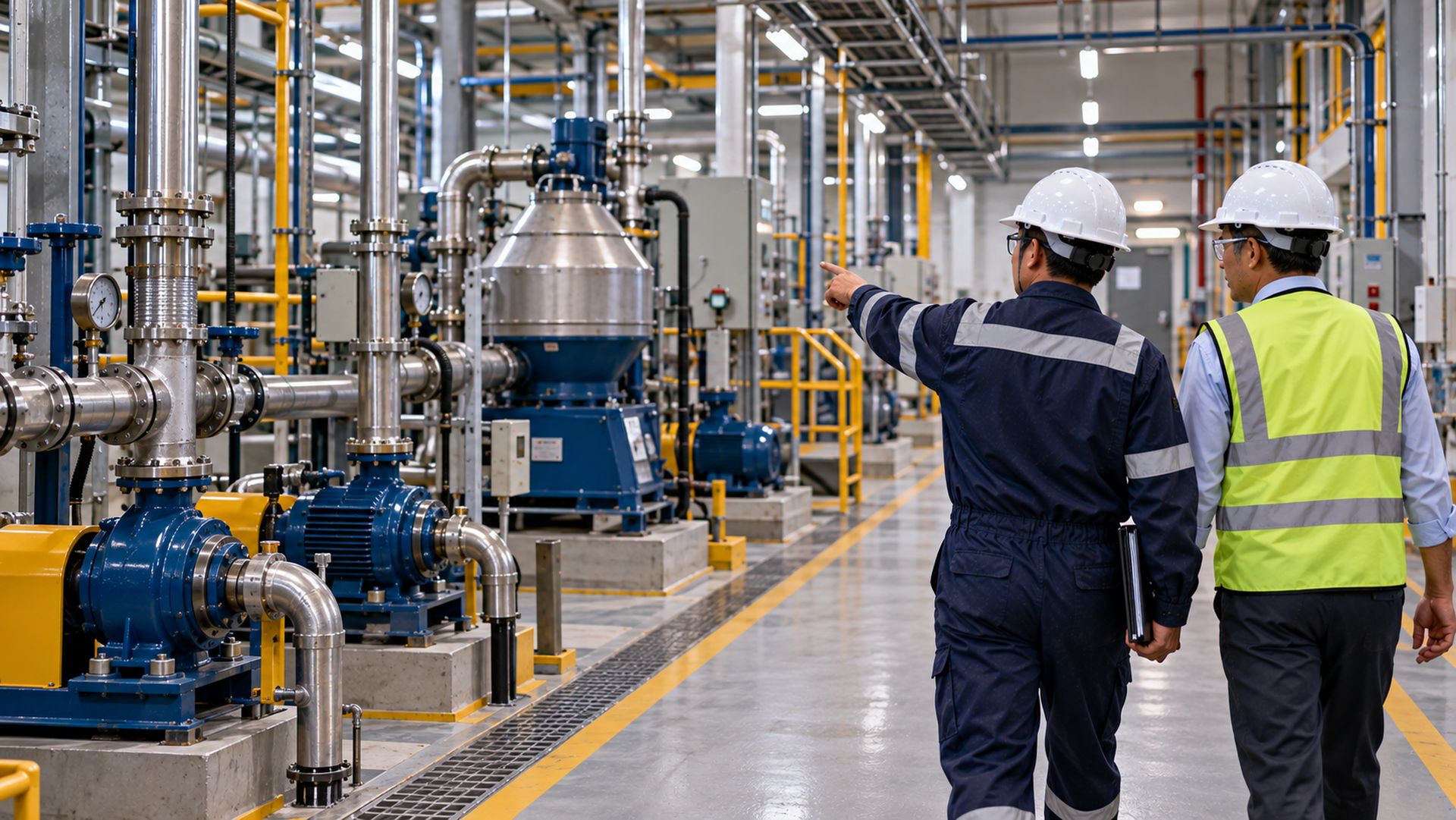
Tell us your unit name, location and the equipment or premises concerned. A thirty-minute walkthrough at your plant — travel included within Visakhapatnam city limits, quoted in advance for outstation sites.